


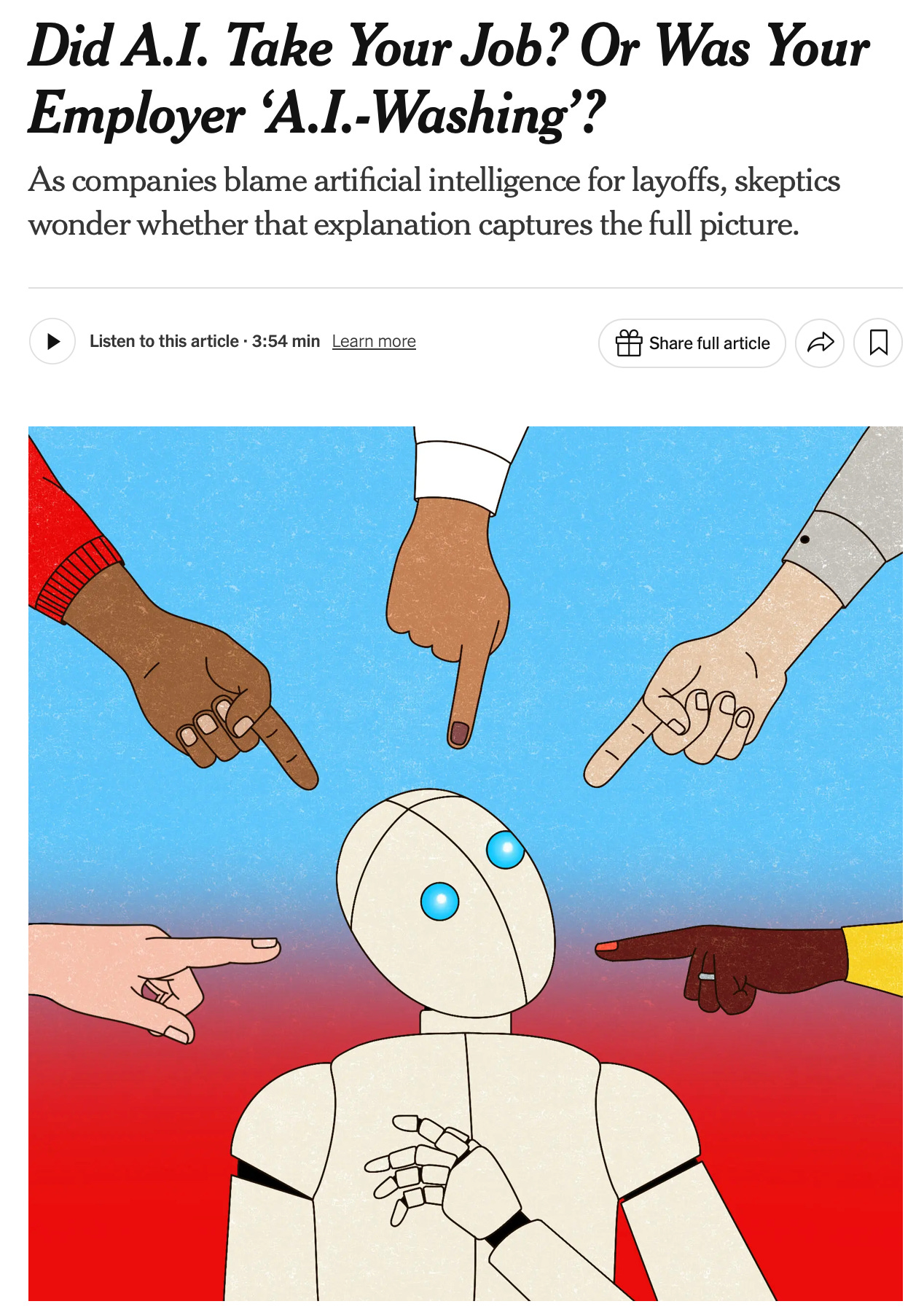
Un articolo del NYT del 1 febbraio riprende un tema delicato già emerso in altre occasioni: notizie che vengono associate a fenomeni di moda per ottenere un'ampia audience o per mascherare altre dinamiche. È l’AI-washing, che ricorda ciò che già abbiamo visto con il greenwashing:
The term echoes popular descriptors of misleading marketing practices, such as greenwashing and ethics washing. It started bubbling up a few years ago, mostly to call out companies that claimed to be using A.I. when they weren’t. But lately, it has been used more broadly to gesture at companies emphasizing A.I. to explain things like layoffs when the picture may be more complex.
Perché questo articolo? Il NYT osserva che in questo periodo si susseguono annunci di licenziamenti che le aziende giustificano con l’avvento dell’AI. In realtà, spesso questi annunci sembrano più preventivi o, addirittura, del tutto scollegati dall’avvento dell’AI:
A.I. was cited in the announcements of more than 50,000 layoffs in 2025, according to Challenger, Gray & Christmas, a research firm.
[…]
“Companies are saying that ‘we’re anticipating that we’re going to introduce A.I. that will take over these jobs.’ But it hasn’t happened yet. So that’s one reason to be skeptical,” said Peter Cappelli, a professor at the Wharton School.
[…]
[…] a recent study Ms. Kinder worked on for the Yale Budget Lab found that artificial intelligence has not yet meaningfully shifted the overall market. Tech firms have cut more than 700,000 employees globally since 2022, according to Layoffs.fyi, which tracks industry job losses. But much of that was a correction for overhiring during the pandemic.
As unpopular as A.I. job cuts may be to the public, they may be less controversial than other reasons — like bad company planning. And in the current environment, where criticizing policies like tariffs could trigger the wrath of the president, it’s “not as risky to frame layoffs as A.I.-related,” Ms. Kinder said, “even if potentially the real culprit is something else.”
Proprio questa mattina mi è arrivata la newsletter di Cal Newport, un osservatore attento delle trasformazioni in atto, che riprende la notizia dei licenziamenti di Amazon (16.000) per proporre lo stesso dilemma: questi licenziamenti sono causati dall’AI o sono dovuti ad altre motivazioni, poi giustificati di fronte al pubblico con le dinamiche legate all’avvento dell’AI? Il titolo dell’articolo di Newport è emblematico: “The Dangers of “Vibe Reporting” about AI.”
Newport osserva che la stessa notizia è stata riportata in due modi diversi da due organi di stampa. CNBC riporta il fatto in questi termini:
In a blog post, the company wrote that the layoffs were part of an ongoing effort to “strengthen our organization by reducing layers, increasing ownership, and removing bureaucracy.” That coincides with a push to invest heavily in artificial intelligence.
Questo testo (e il resto dell’articolo) sembra suggerire una correlazione che non è, in realtà, causale: si tratterebbe di una coincidenza.
Diversamente, Quartz riporta la notizia con un’enfasi ben diversa, mettendo direttamente in relazione il taglio dei posti di lavoro con l’AI.
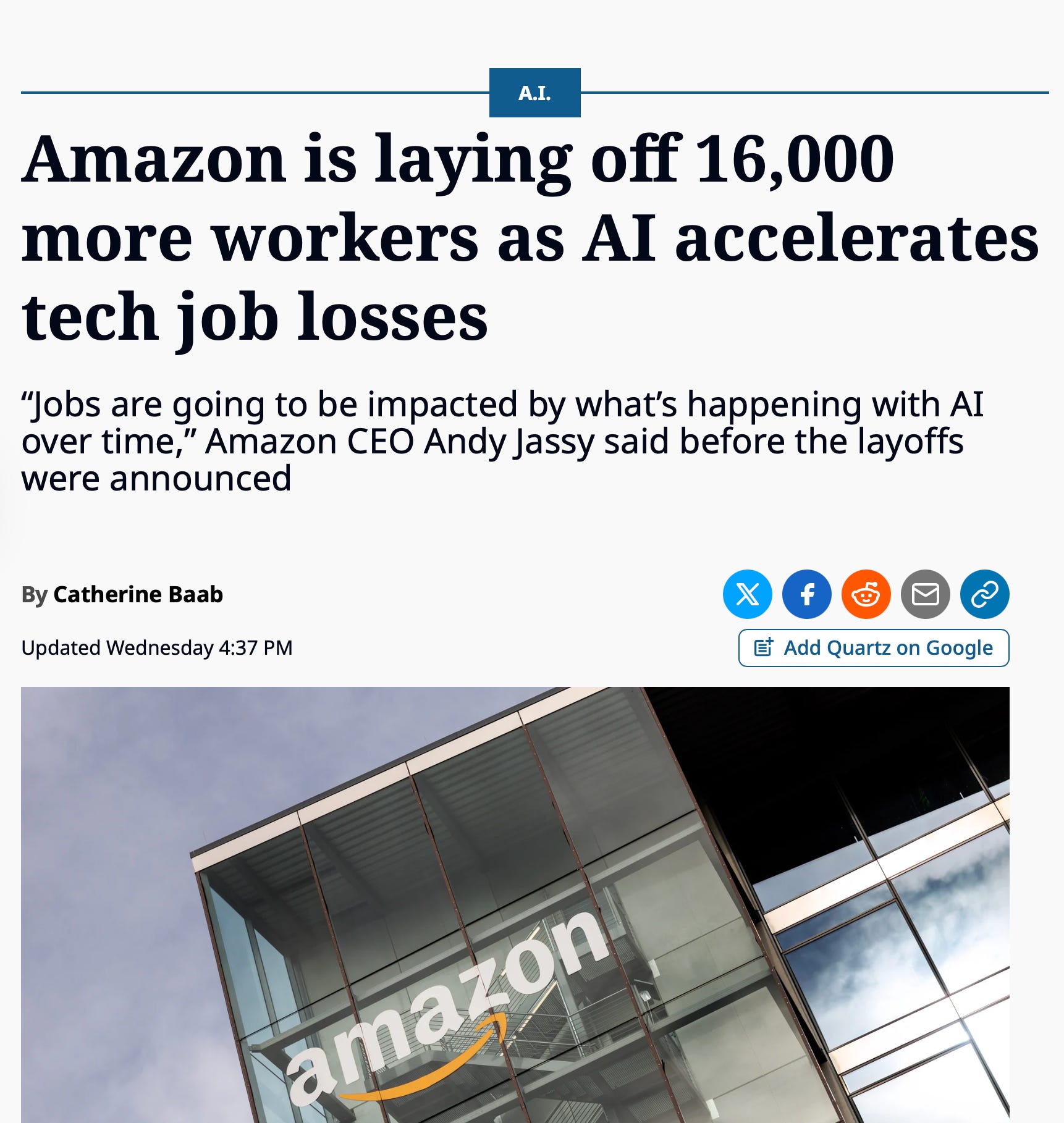
Newport segnala che, ovviamente, non è irrilevante sapere se i tagli siano “causati” dall’adozione di AI, piuttosto che “preventivi” o addirittura casualmente concomitanti. Di certo, notizie date in questo modo catturano l’attenzione. Purtroppo, non aiutano a capire davvero la natura dei fenomeni che stiamo vivendo e quindi sono un cattivo servizio di comunicazione.
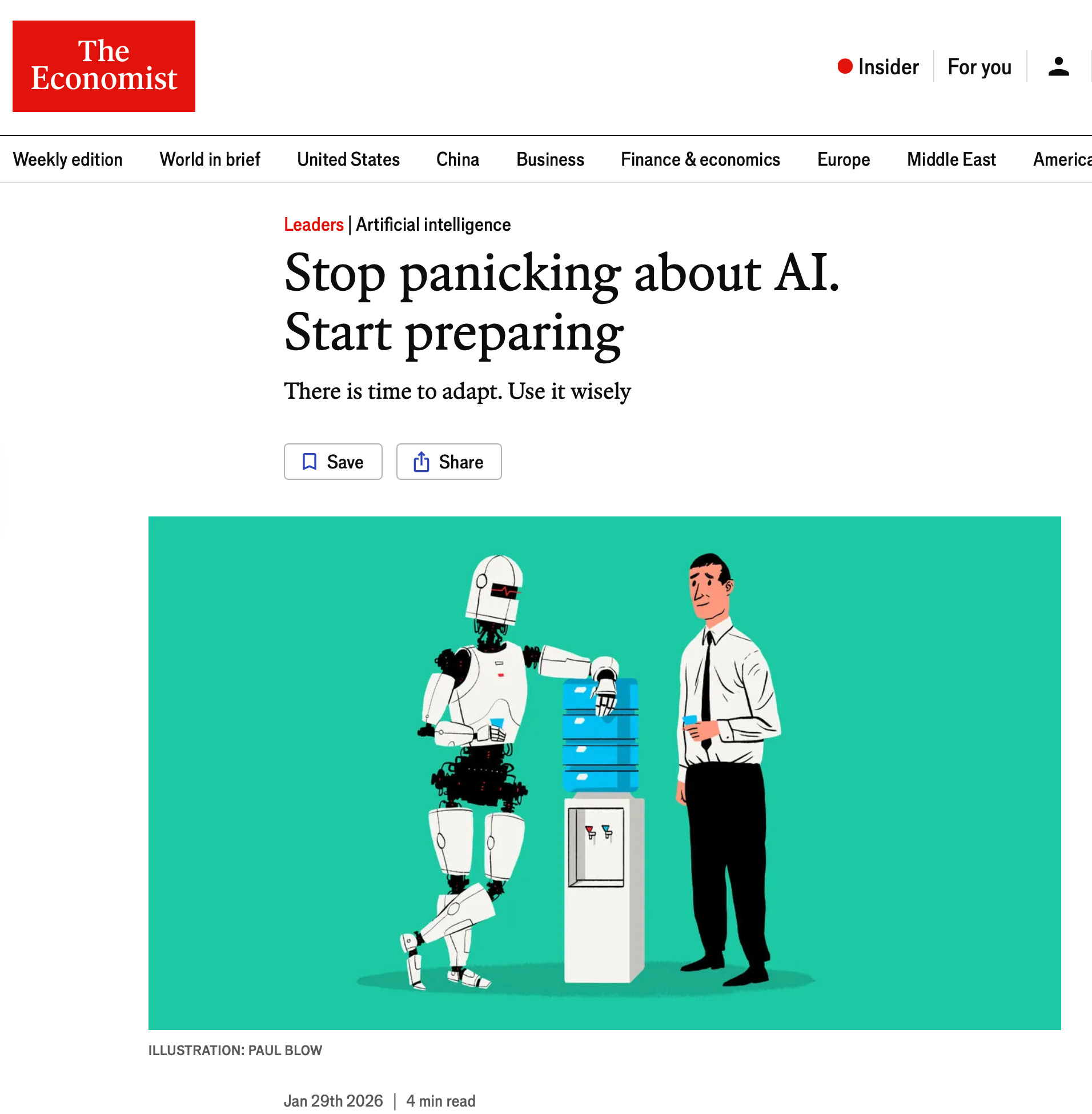
Un articolo del 29 gennaio di The Economist, anch’esso dal titolo emblematico (“Stop panicking about AI. Start preparing”) sottolinea un fatto importante:
So far labour markets seem unruffled. Service jobs are most exposed to generative AI, yet in America the number of white-collar jobs has gone up by 3m since Chatgpt was launched, while blue-collar jobs have stayed flat. Employment has risen even in areas that have been keen adopters, such as coding.
Nel mio precedente post in materia di AI facevo alcune osservazioni che mi pare siano in linea con quanto questo articolo riporta:
Many jobs require skills that are hard to automate, such as judgment or empathy. AI tools could make these roles more productive, lucrative and even more enjoyable: think of a doctor liberated from paperwork. And new technology tends to create jobs; already there is a rise in white-collar jobs that are so new they have no label in the statistics. Yet some roles also look dangerously exposed to automation. Much back-office work involves simple tasks and following a script. Young people in entry-level positions are often asked to crunch data, or summarise reports—precisely the sort of things ais excel at.
Da non perdere la chiusura dell’articolo:
The biggest mistake would be to stop hiring young people altogether. That would not only choke off the pipeline for future talent, it would rob businesses of AI natives. Instead, companies should rethink the type of work they offer young people—less grunt labour, more judgment and analysis; speedier rotations across the business so they gain insight that ai cannot have; piloting new roles and trying new approaches.
Disruption and job losses will be unavoidable. Such is the nature of technological progress. But, despite AI’s feats, there is still time to cushion the blow. It should not be wasted.
Tutti questi commenti confermano che stiamo vivendo una fase concitata. L’ansia di novità, il potenziale che queste tecnologie offrono, l’interesse di chi le propone e l’entusiasmo legittimo che esse suscitano ci stanno facendo perdere lucidità e razionalità. Per questo, credo non ci sia migliore chiusura che l’ultima frase del post di Cal Newport:
Remember: Nothing about these tools is inevitable, and their impact is far from preordained. We don’t need vibes right now. Reality is too important.
> As unpopular as A.I. job cuts may be to the public, they may be less controversial than other reasons — like bad company planning.
Penso che questo sia il punto chiave. Tanti layoff massivi che vediamo sono il risultato di bad planning ma vengono mascherati come reazioni proattive all’avvento dell’AI, che suona molto meglio di “abbiamo scommesso di crescere del 23% e abbiamo fatto solo il 13% e ora dobbiamo tagliare”.